





Imagine this: a customer calls your support line, frustrated and seeking answers. Before they even finish explaining, your agent already knows the customer details without toggling between screens or digging through records. This isn’t a fantasy; it’s the power of Salesforce CTI integration. By seamlessly connecting your telephony system with Salesforce’s robust CRM, businesses can transform their call centers into hubs of efficiency and customer satisfaction. In a world where 96% of customers say great service drives loyalty, why settle for less? Let’s dive into the top five reasons why Salesforce Computer Telephony Integration (CTI) is essential for your call center, backed by compelling data and insights.
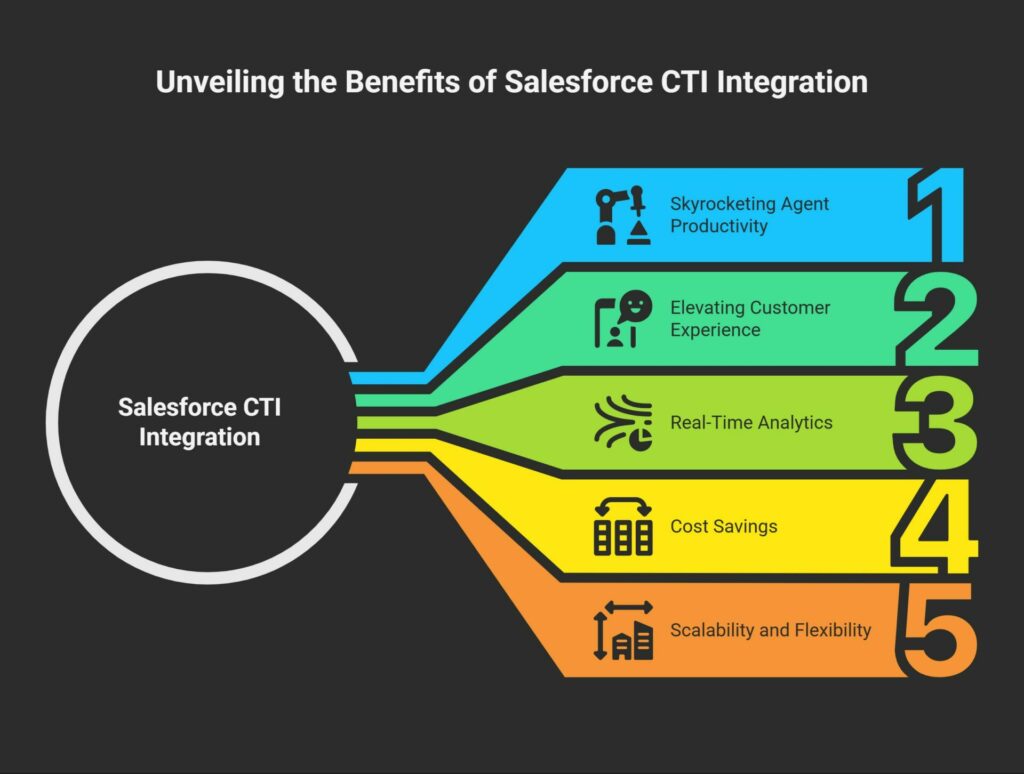
1. Skyrocketing Agent Productivity with Seamless Workflows
Salesforce CTI integration eliminates the need for agents to juggle multiple systems. With features like click-to-dial and screen pops, agents can access customer data instantly within the Salesforce platform, reducing manual tasks and boosting efficiency. For example, a softphone interface allows agents to make, receive, and manage calls (hold, mute, transfer) without leaving their CRM. According to a study by Forrester, businesses using integrated CTI systems report a 25% increase in agent productivity due to streamlined workflows and reduced call-handling time. By automating repetitive tasks like call logging and note-taking, agents can focus on what matters—solving customer problems and closing deals.
This integration also supports power dialers and automated call routing, ensuring calls are directed to the right agent based on skills or customer history, further enhancing operational efficiency.
2. Elevating Customer Experience with Contextual Conversations
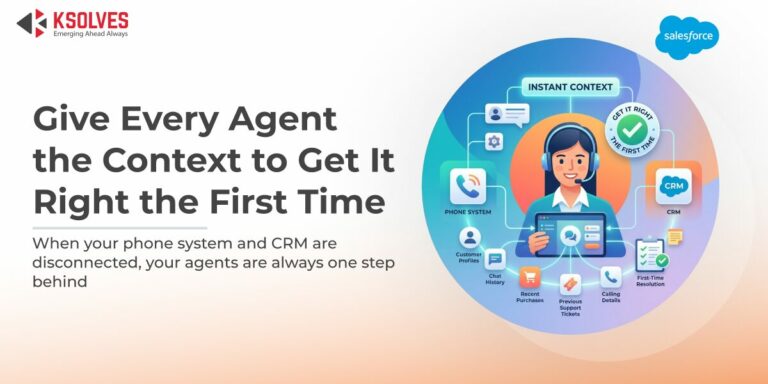
Nothing frustrates a customer more than repeating their issue to multiple agents. Salesforce telephony integration ensures agents have a 360-degree view of the customer before the call even begins. Screen pops display critical details like past interactions, open cases, and purchase history, enabling personalized and informed conversations. A 2023 report by Salesforce found that 80% of customers expect personalized experiences, and CTI integration delivers exactly that. Features like Interactive Voice Response (IVR) and skill-based routing ensure customers are connected to the right department or agent, reducing wait times and increasing first-call resolution (FCR) rates. Businesses with high FCR rates see a 57% reduction in repeat calls, saving time and fostering trust.
3. Real-Time Analytics for Smarter Decision-Making
With Salesforce CTI, every call becomes a data goldmine. Automated call logging captures details like call duration, outcomes, and customer sentiment, which are stored directly in Salesforce. Managers can generate real-time reports to track key performance indicators (KPIs) such as average handle time (AHT), FCR, and customer satisfaction (CSAT). According to a 2024 study by Aberdeen Group, companies using CTI-integrated CRMs saw a 19% improvement in CSAT scores due to enhanced analytics and agent performance tracking. Tools like call monitoring, barge-in, and whisper coaching allow supervisors to provide real-time feedback, ensuring consistent service quality and data-driven improvements.
4. Cost Savings Through Streamlined Operations
Integrating your telephony system with Salesforce reduces operational costs by minimizing manual processes and optimizing resource use. Features like automated call logging and SMS automation eliminate redundant tasks, while local presence dialing increases call pickup rates by displaying familiar area codes. Research from Business Research Insights projects the global CTI market to reach USD 9.07 billion by 2031, driven by its ability to cut costs and boost efficiency. By centralizing communication within Salesforce, businesses can reduce the need for multiple software licenses and physical phone systems, saving up to 30% on operational costs for some contact centers.
5. Scalability and Flexibility for Growing Businesses
Whether you’re a small startup or a global enterprise, Salesforce CTI integration scales with your needs. Platforms like Open CTI allow seamless integration with third-party telephony providers such as RingCentral, Amazon Connect, or Talkdesk, using JavaScript APIs for a browser-based, platform-agnostic solution. This flexibility ensures compatibility with existing infrastructure and supports remote or hybrid teams.
Why Choose CTI Ninja for Your Salesforce Call Center Integration?
To unlock the full potential of right Salesforce telephony integration, look no further than CTI Ninja by Ksolves. Designed to supercharge your call center, CTI Ninja offers a robust suite of features, including real-time IVR, click-to-dial, call recording, and performance analytics, all seamlessly integrated with Salesforce. Whether you’re aiming to boost agent productivity, enhance customer experiences, or scale operations, CTI Ninja delivers a fast, smart, and dependable solution tailored to your needs. Ready to transform your call center?
Explore CTI Ninja today at Ksolves Salesforce CTI Integration and take your customer service to the next level!